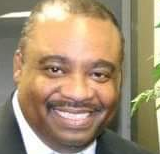
The Answer I Didn’t Say – Ron Crutcher

The kneeler at St. Margaret’s was covered in worn needlepoint, and I knew every stitch of it by the feel under my knees.

Every Sunday the whole congregation went down together for the Confession, and every Sunday I said the words right along with them. We have sinned against you in thought, word, and deed.

Thought. That was the word that caught in my throat.

Nobody in that sanctuary would have guessed it. I was the dependable one. At work I was surrounded by women who trusted me completely, and I never gave a single one of them a reason not to. I held doors. I kept my word. By any measure a person could see, I was a gentleman.

But God could see more than people could. And in the quiet rooms of my mind lived thoughts I would never have spoken aloud. Unclean thoughts. They came without invitation, and they would not leave.

The priest pronounced the absolution. I rose with everyone else, straightened my jacket, and walked out into the Sunday light carrying exactly what I had carried in.

Nobody ever taught me the rule I lived by. I assembled it myself, piece by piece, and by the time I was a grown man it was as solid as a law of nature.

Heaven was for the perfect.

Every sin I had ever committed was a brick, and together they had built a wall between me and God. I could be good from that day until the day I died, and I would never take a single brick down. The past was the past. It was permanent. So was the wall.

So I did the only thing a man can do in front of a wall like that. I tried to climb it.

I kept a ledger in my head. Kindness on one side, failure on the other. I helped elderly ladies across the street. I was generous. I was respectful. I showed up. Some days the ledger felt close to balancing. Most nights, lying awake, it didn’t come close.

If you had asked me back then whether I was going to heaven, I would have said yes without blinking. I would have said it with confidence, even a little pride. What I would not have told you is that the confidence was a coat I wore over the fear.

I came by my faith honestly. It runs in my blood.

My grandfather was one of the early Deacons in the Church of God in Christ. For his family, church wasn’t something they attended. It was the frame their whole lives were built on.

My father helped maintain and expand the church’s Christian school for girls in Yazoo County, near Lexington, Mississippi. The school needed a generator for heat and light, so my father traveled the length and breadth of this nation raising the money to build it. Many of the girls who studied in that warmth and light went on to become great Christian missionaries around the world.

That was the line I came from. Men who kept the lights on. Literally.

What do you do with a legacy like that when you know what goes on inside your own head?

The first clue came when I was just a boy, though I didn’t know it was a clue.

My father was working as a State Engineer by then, and the job required him on site most weekends, Sundays included. So my mother began taking us to my uncle’s Pentecostal church.

One Sunday, a skinny, middle-aged woman got up and began running around the sanctuary. Then she turned on the pastor and began to taunt him, and the voice that came out of her was not her own. It was a man’s voice, deep and powerful and menacing, and it filled the whole room.

I remember the deacons moving toward her. It took seven full-grown men to hold her down. They laid Bibles on her arms and on her feet, and they prayed, and she fought them, and it went on for more than an hour.

And then, slowly, she came back. Her own voice returned, soft and sweet, and she had no memory at all of what she had just done.

Until that moment I believed the world was what I could see. That day I learned the spiritual world was bigger than the physical one.

It didn’t comfort me. It raised the stakes. If the unseen world was that real, then heaven was real. And so was the wall.

Eventually my father enrolled us at St. Margaret’s Episcopal Church in Dayton, and I stayed there through adulthood. I loved the order of it, the beauty of the liturgy, the prayers that never changed. I learned them by heart.

I just didn’t know yet what they meant for me.

So when the thoughts kept coming, I did what faithful people do. I prayed. I asked God, plainly and repeatedly, to take them away. Remove them. Make my mind clean. Make me perfect, so I could finally be good enough.

He didn’t take them away.

But something else happened, something I had no name for. When those thoughts came, I found I could stand against them. I wasn’t rescued from the battle. I was just strong enough to keep walking through it, day after day, without falling.

I had asked God for perfection. He gave me strength instead.

At the time it felt like half an answer. I didn’t understand that God was not waiting for me to become flawless before He would help me. He was already helping me, right in the middle of the mess.

It was the second clue. I walked right past it.

Years later I left Dayton for Cincinnati, and I started attending a Bible study led by a church planter named Levi G.

Levi moved from town to town, starting Bible study groups and building them into small congregations and churches. He was a builder, like my father. Only what Levi built was made of people.

There were eight of us in that Bible study, Bibles open in our laps. Levi was a passionate man with a deep, unshakable confidence in God. He didn’t talk about faith like a subject he had studied. He talked about it like a man who knew exactly where he stood, and he wanted everyone in that room to stand there too.

One evening he turned that confidence on me.

“Are you saved?”

“Yes,” I said. It was an easy question. I’d been in church my whole life.

“How do you know you’re saved?”

I didn’t hesitate. I laid out my case. “Well, I’m a good person. I try to do right by people. I help old ladies across the street…”

He stopped me mid-sentence.

“You’re not saved.”

I stared at him. I was shocked, and I was annoyed, both at the same time. I felt the heat climb up my collar. Who does this man think he is? Does he know who my grandfather was? Does he know what my father built? I had come to study the Bible, not to be told I’d failed a test I didn’t know I was taking.

Then Levi said something that stopped the argument in my head cold.

“There is only one way to be saved,” he said, “and you didn’t say it.”

It didn’t sound like an accusation. It sounded like a missing piece.

I had spent my whole life building a case for myself. And this man, with a certainty I couldn’t shake, was telling me that I had been arguing the wrong case all along.

“Open your Bible,” he said, “to Romans 10.”

The pages were thin, and my fingers weren’t quite steady. I found the chapter. I found the verse.

“If you declare with your mouth, ‘Jesus is Lord,’ and believe in your heart that God raised him from the dead, you will be saved.”

I read it once. Then I read it again, slower, looking for the catch.

Where was the part about perfection? Where was the requirement to erase the past? To clean every thought? To balance the ledger?

It wasn’t there.

Declare. Believe. That was all. The requirement wasn’t my perfection. It was His resurrection.

And suddenly the clues I had walked past for years rearranged themselves in front of me. The unseen world that was bigger than this one. The prayer answered with strength instead of perfection. A God who had been carrying me long before I ever understood what He was doing.

I had spent my life trying to climb a wall. There had always been a door.

So I did it. Right there, with my Bible open in my lap, I confessed with my mouth that Jesus is Lord, and I believed in my heart that God raised Him from the dead.

I wish I could tell you there was thunder. There wasn’t. What happened was quieter and far bigger than that.

The weight left.

I felt it go out of my shoulders first, then out of my chest. I took a breath that went deeper than any breath I could remember. It was the kind of weight you carry so long you mistake it for part of your own body, until the moment it’s gone and you realize you were never built to carry it at all.

For years I had stood outside the gate, certain I was locked out forever. In one moment I knew, with a certainty I have never lost, that I was in. Not for a season. Not until my next mistake. Forever.

I still say the Confession. I still say in thought, word, and deed. I am still a man who needs God’s strength every single day.

But I don’t say those words as a stranger at the gate anymore. I say them as a son who has already been brought home.

In time, I became a builder too, like my father, like Levi. Together with Pastor Doug Glanton, Betty Glanton, Denise Glanton, and Norma King, I co-founded Beyond the Veil Ministries in Cincinnati. Norma King would later become Norma Crutcher, my wife.

I’ve always felt the name fit my story. As a boy in my uncle’s church, I watched seven deacons wrestle with something none of us could see, and I learned that the spiritual world was bigger than the physical one. What I didn’t understand until Romans 10 was that the most powerful thing beyond the veil was never darkness. It was grace.

From that day to this, I have never once wondered whether I am saved. Not because I became perfect. I didn’t. Because salvation was never resting on me in the first place.

It was never a wall. It was a door. And it had been open the whole time.

That’s all it takes.